Which Zodiac Sign is The Best in Business?
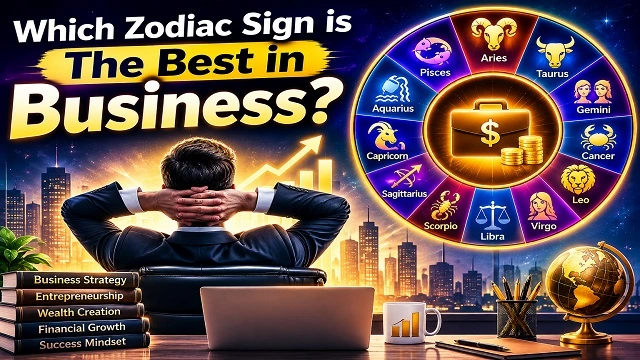
Every astrology site has an answer to this, and if you read three of them back to back you’ll notice something funny — they don’t agree. One says Leo, another says Scorpio, another swears it’s Capricorn, and a few throw around suspiciously specific percentages like “16.67% of business leaders are this sign,” as if someone actually ran a rigorous study instead of just skimming a list of famous CEOs and counting birthdays. Worth being upfront about that before we go any further: there’s no real study proving any sign dominates business success. What follows is the traditional astrological reasoning behind why certain signs get mentioned constantly in this conversation, not a scientific ranking.
With that out of the way, let’s actually get into it, because the reasoning itself is genuinely interesting even without hard data behind it.
Capricorn comes up more than almost any other sign in these conversations, and the logic tracks even if you’re skeptical of astrology generally. Capricorns are traditionally associated with discipline, long-term planning, and a willingness to grind through years of unglamorous work before anything pays off. That’s basically the founder story of half the companies you’ve heard of. Jeff Bezos is a well-known Capricorn, and whatever you think of Amazon, the “start small, play an absurdly long game, reinvest everything” strategy does line up pretty neatly with the traits astrologers assign the sign.
Scorpio gets mentioned constantly too, usually for a different reason — intensity and strategic thinking rather than patience. Scorpios are traditionally read as sharp judges of people, comfortable with high-stakes situations, and drawn to control and transformation, which shows up a lot in astrology writing about finance, law, and turnaround-style business (buying something struggling and rebuilding it). Bill Gates gets cited as a Scorpio example fairly often in this space.
Leo shows up for almost the opposite reason — not strategic quietness but sheer visibility. Leos are traditionally associated with confidence, charisma, and a genuine need to be seen leading something, which maps well onto founder-as-public-figure businesses, personal branding, and anything where the leader’s presence is part of the product. It’s not hard to see why a sign built around magnetism gets tied to business leadership constantly in astrology content.
Taurus gets less flash but a lot of respect in this conversation, mostly for patience and a genuine comfort with slow, steady growth rather than chasing quick wins. Taurus is also traditionally linked to money and material stability specifically, since it’s ruled by Venus, so there’s a natural thematic tie to business and wealth-building beyond just personality traits. Mark Zuckerberg is sometimes brought up here, mostly for the methodical, long-game way Facebook scaled rather than any early flashiness.
Virgo tends to get credit for the unglamorous but genuinely essential side of running something — attention to detail, systems thinking, an almost compulsive need to catch what’s wrong before it becomes a real problem. Warren Buffett gets cited as a Virgo example a lot, usually tied to his famously careful, unemotional approach to evaluating investments rather than any big swings.
Aries shows up for the opposite skill set entirely — risk tolerance and speed. Aries is traditionally the sign most comfortable moving fast and taking a real swing before anyone else is ready to, which lines up with the popular image of a disruptive startup founder more than a steady operator. Elon Musk gets mentioned here constantly, for what it’s worth, usually tied to the willingness to bet big on ideas most people thought were reckless.
A handful of other signs show up regularly too, just for slightly different reasons. Aquarius gets tied to unconventional thinking and innovation-driven business. Sagittarius gets credit for big-picture vision and comfort with international or expansion-heavy growth. Cancer gets linked to business built around genuine care or community, which shows up more in service-based and mission-driven companies than in the “billionaire founder” archetype most of these lists are secretly obsessed with.
Here’s the thing worth sitting with, though. Every one of these connections works because astrology traits are broad enough to fit almost any business story you want to tell them into. Patience explains slow, steady success. Boldness explains fast, disruptive success. Attention to detail explains careful, methodical success. Charisma explains public-facing success. There’s no trait combination that couldn’t plausibly explain some version of “and that’s why they succeeded,” which is a pretty strong sign the framework is doing less predictive work than it looks like from the outside. You could probably build an equally convincing case for any sign being “the business sign” if you picked the right examples and leaned into the right traits.
That’s not really a criticism of astrology as a hobby or a reflective tool, to be clear. It’s more a caution about taking “best sign for business” content at face value, especially when a site backs it up with a suspiciously exact percentage that no credible source actually generated through real research. If you enjoy this stuff, the traits themselves are worth thinking about honestly. The specific rankings are mostly just content dressed up as data.
What I think is actually useful here isn’t figuring out whether your sign is “the best” one, since every sign has a plausible business case built for it somewhere on the internet. It’s noticing which traits genuinely resonate as things you either have or wish you had, and treating that as a nudge toward developing them, rather than treating your sign as a verdict on your business potential either way. A Pisces doesn’t need to feel locked out of entrepreneurship because Pisces rarely tops these lists, and a Capricorn doesn’t automatically succeed just because their sign shows up first.
Real business success, as far as anyone can actually measure it, tracks a lot more closely with things like access to capital, timing, industry knowledge, risk tolerance you can actually afford to have, and frankly a good amount of luck, than with anyone’s birth chart. Astrology can be a fun lens for reflecting on your own working style and strengths. It’s a much weaker tool for predicting outcomes, and the business-success genre of astrology content in particular tends to reverse-engineer its conclusions from already-famous people, which makes for a satisfying story but not a reliable pattern.
If you actually want to use your sign’s traits productively instead of just reading about them, the more useful exercise is picking one or two traits from your sign’s traditional description and asking honestly whether you already lean into them at work, or whether you’ve been avoiding them out of habit. A Libra reading about Aries-style risk tolerance might notice they’ve been playing it safe longer than actually feels good. A naturally cautious Virgo reading about Leo’s comfort with visibility might realize they’ve been hiding good work instead of promoting it. The value isn’t in confirming your sign matches your job title, it’s in using the trait descriptions as a mirror for habits you might not have named yet.
It’s also worth remembering that most people running actual businesses are combinations of these traits regardless of their Sun sign, because running something day to day requires patience and boldness and attention to detail and charisma at different moments, often within the same week. Nobody succeeds purely on one trait for very long. The zodiac framing tends to flatten that complexity into a single defining quality per sign, which makes for a cleaner article but a less accurate picture of what actually running a business day to day tends to require.
FAQs:
No credible, peer-reviewed research supports this. Most “studies” circulating online are informal surveys of a small number of famous people’s birthdays, not controlled scientific research, and the specific percentages you’ll see quoted should be treated skeptically.
Why do so many articles list different “best” signs?
Because there’s no standardized methodology behind any of these lists. Different writers pick different traits to emphasize and different famous examples to cite, so you’ll see real variation depending on which article you land on.
Should I avoid starting a business if my sign isn’t usually listed as a “business sign”?
No. These lists are built around broad personality associations, not predictive science. Business success depends far more on factors like capital, timing, and industry knowledge than on your zodiac sign.
Do famous entrepreneurs actually share the same sign more often than chance would predict?
Not in any statistically meaningful way that’s been rigorously demonstrated. With twelve signs and a relatively small pool of famous examples typically cited, apparent clustering is more likely coincidence or selective example-picking than a real pattern.
Is there a “worst” zodiac sign for business, then?
Not really, no. Every sign gets a plausible business case built around its traits somewhere in astrology writing, which says more about how flexible trait-based reasoning is than about any sign being genuinely disadvantaged.
This article is intended for general entertainment and reflection. Astrology is a traditional belief system, not an empirically validated science, and shouldn’t be used as a factor in real business or career decisions. Business success depends on far more concrete factors than a zodiac sign, including planning, market research, and professional guidance where appropriate.