Maybe you’re the person friends call when they need advice. Perhaps you enjoy teaching someone a skill, solving a customer’s problem, caring for a family member, or simply listening when someone needs to talk. You may feel more motivated when your work has a visible positive effect on another person’s life.
If that sounds familiar, you may be wondering which career would allow you to turn that part of your personality into meaningful work.
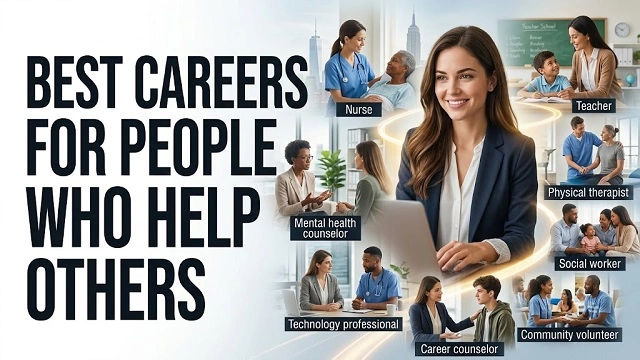
The best careers for people who like to help others can be found across healthcare, education, social services, counseling, technology, business, nonprofit organizations, and many other industries. You don’t necessarily need to become a doctor, nurse, or therapist to make a difference.
Helping people can take many forms.
Some professionals help people recover from illness. Others teach children, guide students through college, help families find resources, protect communities, solve financial problems, improve access to technology, or support people during difficult transitions.
The important thing is finding a type of helping that matches your personality, skills, education goals, financial needs, and preferred lifestyle.
This guide explores career options for people who genuinely enjoy helping others, explains what these jobs are actually like, and offers a practical way to choose a career that feels both meaningful and realistic.
What Does It Mean to Be a Person Who Likes Helping Others?
People who enjoy helping others are not all the same.
One person may love direct one-on-one conversations. Another may prefer solving practical problems behind the scenes. Someone else may enjoy teaching a classroom full of students.
You might enjoy helping people because you are:
- Empathetic
- Patient
- A good listener
- A natural teacher
- A problem solver
- Encouraging
- Organized
- Compassionate
- Responsible
- Good at communication
- Calm during stressful situations
- Interested in people’s experiences
Helping others also does not mean you have to sacrifice your own needs. A sustainable career should provide a reasonable balance between purpose, compensation, workload, personal boundaries, and lifestyle.
For example, someone who wants to help people but also values predictable working hours may prefer certain education, administrative, technology, or business roles rather than a career involving emergency situations.
The goal is not simply to find a job where you help people. The goal is to find a job where the way you like helping people matches the actual work.
Why Helping Others Can Be a Rewarding Career Choice
Work takes up a significant part of adult life. For many people, earning a paycheck is important, but it isn’t the only consideration. They also want to feel that their time and abilities are being used for something meaningful.
A helping-oriented career can provide that sense of purpose. For example, a teacher might see a student finally understand a difficult concept. A physical therapist might watch a patient regain mobility. A career counselor might help someone choose an educational path. A social worker might connect a family with essential resources. A customer support specialist might solve a problem that has been frustrating someone for days.
These experiences can create a direct connection between your work and its impact. However, it is important to have realistic expectations. Helping professions can also be emotionally demanding. Some involve difficult conversations, heavy workloads, stressful situations, or exposure to other people’s problems.
That is why self-awareness is important when choosing among the best careers for people who like to help others.
24 Best Careers for People Who Like to Help Others
1. Registered Nurse
Nursing is one of the most obvious career paths for someone who wants to help others directly. Registered nurses care for patients in hospitals, clinics, physician offices, nursing facilities, schools, and other healthcare settings.
Depending on their role, nurses may: monitor patients, administer treatments and medications, educate patients and families, communicate with physicians, provide emotional support, record patient information, and help patients understand their care.
Nursing can be deeply meaningful because nurses often spend significant time with patients and families. At the same time, it can be physically and emotionally demanding. Shifts may include nights, weekends, or holidays depending on the workplace. Education and licensing requirements apply, so anyone considering nursing should research the requirements in their state.
2. Teacher
Teaching is another strong choice for people who enjoy helping others learn and grow. Teachers do much more than present information. They help students build confidence, develop skills, overcome challenges, and prepare for future opportunities.
Teachers work with students at different educational levels, including: elementary school, middle school, high school, community college, adult education, and special education.
Teaching may be especially rewarding if you enjoy explaining ideas and watching people improve over time. It can also be demanding. Classroom management, lesson planning, grading, communication with families, and administrative responsibilities are all part of the job. Still, for someone who genuinely enjoys education and mentorship, teaching can provide a strong sense of purpose.
3. School Counselor
School counselors help students navigate academic, personal, social, and career-related challenges. Their work may include: academic planning, career exploration, college preparation, student support, conflict assistance, referrals to additional resources, and social and emotional support.
This career may appeal to someone who enjoys listening and guiding rather than simply giving instructions. School counseling generally requires specialized education and credentials, with requirements varying by state. If you like helping young people think about their future, this may be a career worth investigating.
4. Social Worker
Social workers support individuals, families, and communities facing difficult circumstances. Their work can involve areas such as: family services, child welfare, healthcare, mental health, community services, housing support, substance-use services, and school services.
Social workers may help people access resources, navigate complicated systems, create plans, and cope with difficult situations. The profession requires empathy, communication skills, patience, organization, and strong boundaries. It can also be emotionally challenging.
Someone considering social work should understand both sides of the profession: the opportunity to make a meaningful difference and the emotional demands that can come with helping people through serious problems.
5. Mental Health Counselor
Mental health counselors help people work through emotional, behavioral, and personal challenges. Depending on their training and credentials, professionals may work with individuals, couples, families, children, or groups.
Counseling often requires: active listening, empathy, communication, emotional awareness, patience, and professional boundaries.
This career may suit someone who enjoys having meaningful conversations and helping people develop healthier ways of handling challenges. Because mental health professions involve specialized training and licensing, education requirements should be researched carefully before choosing this path.
6. Physical Therapist
Physical therapists help patients improve movement, manage physical limitations, and recover after injuries or medical conditions. They may work with people recovering from: injuries, surgeries, sports problems, neurological conditions, and chronic physical limitations.
Physical therapy can be particularly rewarding because progress may be visible over time. A patient who initially struggles to walk, move an arm, or complete a daily activity may gradually regain ability with appropriate treatment and exercise.
This career can suit someone who enjoys healthcare but also likes movement, science, coaching, and hands-on interaction.
7. Occupational Therapist
Occupational therapists help people develop or regain skills needed for everyday activities. They may work with people recovering from injuries, living with disabilities, or dealing with developmental or medical conditions.
The goal is often practical: How can this person participate more independently in daily life? That might involve helping someone dress, prepare food, work, study, or perform other activities.
Occupational therapy can be a good match for people who enjoy problem-solving and personalized support.
8. Speech-Language Pathologist
Speech-language pathologists work with people who experience communication or swallowing difficulties. They may support: children with speech or language challenges, adults recovering from neurological conditions, people with communication disorders, and individuals with swallowing difficulties.
The work can involve assessment, therapy, education, and collaboration with families or other professionals. If you enjoy communication and want a healthcare-related career focused on helping people improve an important everyday ability, this field may be worth exploring.
9. Career Counselor
Not everyone who helps others needs to work in healthcare. Career counselors help people understand their interests, skills, educational options, and career possibilities.
They may work with: high school students, college students, career changers, job seekers, adults returning to work, and people considering further education.
This can be an excellent fit if you enjoy listening, asking questions, researching careers, and helping people make decisions. It may also appeal to people who have a strong interest in career development and education.
10. Human Resources Professional
Human resources can be a surprisingly meaningful career for people who enjoy helping others in a workplace environment. HR professionals may assist employees with: hiring, onboarding, benefits, workplace policies, professional development, employee relations, training, and career growth.
An HR professional may spend much of their time communicating with people and helping organizations create better working environments. This field can be especially attractive if you like people but also enjoy business, organization, and problem-solving.
11. Customer Success Specialist
Customer success is different from traditional customer service. The goal is often to help customers get meaningful results from a product or service. For example, a customer success professional at a software company might help a business learn how to use a platform effectively.
The work can involve: training, problem-solving, relationship management, communication, product education, and account support.
This can be a good career for someone who enjoys helping people solve practical problems but does not necessarily want to work in healthcare or education.
12. Occupational or Vocational Rehabilitation Counselor
Rehabilitation counselors help people manage barriers related to disabilities, employment, education, and independent living. They may help individuals identify career possibilities, develop plans, access resources, and navigate employment challenges.
This career combines several skills: counseling, career planning, advocacy, communication, problem-solving, and resource coordination.
If you want a career focused on helping people become more independent and achieve personal or professional goals, rehabilitation counseling may be worth researching.
13. Nonprofit Professional
Nonprofit organizations operate across countless causes, including: education, food security, housing, environmental protection, animal welfare, community development, healthcare, disaster assistance, and youth programs.
Not every nonprofit job involves direct counseling or caregiving. You might work in: fundraising, communications, program management, operations, marketing, volunteer coordination, or grant writing.
This makes nonprofit work one of the more flexible options among the best careers for people who like to help others. You can contribute to a cause while using skills you already have.
14. Community Health Worker
Community health workers help people connect with healthcare information and services. They may work directly within communities and help individuals understand available resources.
Their responsibilities can include: health education, resource navigation, outreach, appointment support, community communication, and connecting people with services.
This career can appeal to people who enjoy direct community interaction and practical problem-solving. Requirements can vary depending on the position and location.
15. Dietitian or Nutrition Professional
People who enjoy health education may consider nutrition-related careers. Registered dietitians and nutrition professionals can help people understand food, nutrition, and healthy habits within their professional scope.
They may work in: hospitals, clinics, schools, community programs, private practice, sports settings, and research.
Nutrition careers often combine science, communication, education, and one-on-one support. Professional requirements vary by role and state, so it is important to verify current licensing and credential requirements.
16. Emergency Medical Technician
Emergency medical technicians provide urgent medical assistance and transportation during emergencies. This can be meaningful work for people who remain calm under pressure and want to help people during critical moments.
However, emergency response work can be physically and emotionally demanding. It may involve unpredictable situations, long shifts, stressful environments, and exposure to serious injuries or medical emergencies. Before choosing this career, think honestly about how you handle high-pressure situations.
17. Firefighter
Firefighters do much more than fight fires. Depending on the department, their work may involve emergency response, rescue operations, public safety education, medical assistance, and community service.
Firefighting can appeal to people who: work well under pressure, like teamwork, want to serve their community, prefer active work, and enjoy solving problems quickly.
It is important to understand that firefighting is highly team-oriented. If you like helping people but also enjoy being part of a close team, this may be an excellent combination.
18. Police or Public Safety Careers
Public safety careers can provide opportunities to serve communities and protect people. Depending on the role, responsibilities can include: responding to emergencies, community outreach, investigations, traffic safety, public education, and crisis response.
These careers involve significant responsibility and can be stressful. Anyone considering public safety should research the specific position, training requirements, working conditions, and responsibilities in their area.
19. Librarian
Libraries have evolved far beyond books. Modern librarians may help people with: research, technology, education, digital resources, job searching, community programs, and information literacy.
Libraries often serve as important community resources. This career may suit someone who enjoys information, education, organization, and helping people find answers. Depending on the position, specialized education may be required.
20. Academic Advisor
Academic advisors help students make educational decisions. They may assist with: course selection, degree planning, graduation requirements, academic challenges, career-related education decisions, and campus resources.
This career can be rewarding if you enjoy helping people make plans and stay on track. It also combines communication, organization, education, and problem-solving.
21. Personal Financial Counselor or Financial Educator
Financial stress affects many people’s lives. Professionals who help individuals understand budgeting, financial planning, debt, saving, or other financial topics can provide valuable support.
The exact role and professional requirements vary significantly depending on the services offered. If you enjoy numbers but also want your work to have a direct impact on people’s lives, financial education or counseling may be worth exploring. Be sure to understand any licensing or regulatory requirements associated with providing financial advice.
22. UX Designer
User experience design is another way to help people without working in a traditional helping profession. UX designers think about how people interact with websites, apps, and digital products.
They ask questions such as: Is this easy to understand? Can users find what they need? Where are people getting confused? How can this process be simpler?
The result is often a product that is easier and more enjoyable to use. If you enjoy creativity, technology, research, and solving people’s practical problems, UX design could be an interesting career direction.
23. Software Developer Focused on Accessibility
Technology professionals can also have a direct positive impact. Developers who work on accessibility may help create digital experiences that are easier for people with disabilities to use.
This can involve: accessible websites, assistive technology, inclusive software, mobile applications, and digital services.
It is an example of how someone can combine technical skills with a desire to help others. You do not have to work in a traditional helping profession to make a meaningful difference.
24. Teacher or Tutor for Adults
Helping others learn does not stop after high school. Adult educators and tutors may help people develop: English skills, computer skills, professional skills, literacy, job-related abilities, and test preparation knowledge.
This can be especially rewarding if you enjoy seeing someone gain confidence as they learn something new.
How to Choose the Right Helping Career
There are many best careers for people who like to help others, but that does not mean every helping profession will suit you. Start by asking what kind of helping feels natural.
Do you enjoy listening?
Consider counseling, social work, advising, coaching, or support roles.
Do you enjoy teaching?
Consider education, tutoring, training, academic advising, or instructional design.
Do you enjoy solving practical problems?
Consider healthcare, technology, customer success, consulting, or rehabilitation.
Do you enjoy physical activity?
Consider physical therapy, occupational therapy, emergency services, or skilled service careers.
Do you enjoy organizing?
Consider nonprofit management, HR, healthcare administration, program coordination, or project management.
Do you enjoy technology?
Consider UX design, accessible technology, software development, technical support, or digital education.
Your preferred way of helping matters.
Helping Others Does Not Mean Ignoring Your Own Needs
One mistake people sometimes make is choosing a career entirely because they want to help others. Purpose is important, but you also need to consider yourself.
Think about: salary, schedule, education requirements, student debt, work environment, stress, physical demands, emotional demands, job availability, advancement opportunities, location, and family responsibilities.
For example, you may love the idea of helping people in an emergency but discover that rotating overnight shifts are not compatible with your life. Someone else may love teaching but dislike classroom management. Another person may enjoy counseling but find emotionally intense conversations exhausting.
These discoveries do not mean you failed. They help you identify the type of helping career that fits you better.
What Skills Are Important for Helping Professions?
Many careers centered around helping others share several skills.
Empathy
You need to understand that people have different experiences, needs, and perspectives.
Listening
Good helpers do not simply wait for their turn to speak. They listen carefully.
Communication
You need to explain information clearly and respectfully.
Patience
People do not always change or learn quickly.
Problem-solving
Helping often involves finding practical solutions.
Emotional boundaries
You can care about someone without taking every problem home with you.
Organization
Many helping careers involve schedules, documentation, follow-ups, and multiple responsibilities.
Adaptability
Every person is different, so one solution rarely works for everyone.
How to Test a Helping Career Before Committing
Before spending years preparing for a career, try to experience it in a smaller way. You could:
- Volunteer at a nonprofit
- Tutor a student
- Help at a community organization
- Shadow a professional
- Interview someone working in the field
- Take an introductory course
- Volunteer in a hospital or community program where appropriate
- Work part-time in a related environment
- Join a professional organization
- Attend a career event
Ask professionals what their typical day actually looks like. A job description tells you what a career is supposed to involve. A real professional can tell you what it actually feels like. That distinction is extremely valuable.
Can You Help People Without Working in Healthcare?
Absolutely. Healthcare is only one category. People need help in almost every industry.
- A technology professional can make software easier to use.
- A teacher can help students learn.
- An HR professional can help employees navigate workplace challenges.
- A financial educator can help people understand money.
- A designer can make information easier to understand.
- A nonprofit professional can organize programs for communities.
- A customer success specialist can help businesses use important tools.
- A career counselor can help someone find a direction.
This is why the best careers for people who like to help others are much broader than traditional caregiving jobs.
A Simple Exercise to Find Your Ideal Helping Career
Take a piece of paper and answer these five questions.
1. Who do I most enjoy helping?
Children? Adults? Older people? Students? Customers? Families? Professionals? Communities?
2. What kind of problems do I enjoy solving?
Health? Education? Technology? Money? Career decisions? Emotional challenges? Organization? Communication?
3. How do I prefer to help?
Teaching? Listening? Building? Explaining? Researching? Organizing? Creating? Leading?
4. What work environment do I prefer?
Office? School? Hospital? Remote? Outdoors? Community? Laboratory? Business?
5. What lifestyle do I need?
Predictable hours? Flexible work? Higher earning potential? Remote work? Part-time options? Career advancement?
Once you answer these questions, compare your answers with actual career descriptions. You may start seeing patterns.
Explore Further
Frequently Asked Questions
Some strong options include nursing, teaching, counseling, social work, physical therapy, occupational therapy, career counseling, human resources, nonprofit work, community health, customer success, academic advising, and accessible technology. The right option depends on your skills, education, interests, and lifestyle.
There is no single best career for everyone. Someone who loves teaching may prefer education, while someone who enjoys listening may prefer counseling. A person who enjoys practical problem-solving might prefer healthcare, technology, or rehabilitation.
Yes. Some helping-oriented jobs have entry-level pathways that do not require a traditional four-year degree, although requirements vary by occupation and state. Examples may include certain support, community service, emergency, education assistant, or customer-focused positions.
Some can be. Healthcare, counseling, social work, emergency services, and other direct-service careers can involve emotionally difficult situations. It is important to understand the emotional demands of a profession before choosing it.
Yes. Helping people does not automatically require being highly outgoing. Listening, patience, observation, empathy, and thoughtful communication can be valuable strengths for introverted professionals.
Some helping professions can provide strong earning opportunities, while others may have more modest salaries. Compensation varies by occupation, education, experience, location, industry, and specialization. Research current compensation information before making a career decision.
Start by identifying who you enjoy helping, what problems you like solving, how you prefer to interact with people, and what type of lifestyle you want. Then gain real-world exposure through volunteering, job shadowing, courses, or conversations with professionals.
Final Thoughts
The best careers for people who like to help others are not limited to one industry or one type of personality.
You can help people through healthcare, education, technology, business, counseling, nonprofit work, finance, public service, design, or customer support.
The key is understanding how you like to help.
- Maybe you enjoy teaching.
- Maybe you prefer listening.
- Maybe you love solving practical problems.
- Maybe you enjoy encouraging people.
- Maybe you are good at explaining complicated information.
- Maybe you want to build tools that make people’s lives easier.
All of these can become valuable career strengths.
At the same time, don’t choose a career simply because it sounds meaningful. Look at the daily reality. Research the education requirements, income potential, work environment, schedule, emotional demands, and opportunities in the U.S. location where you plan to work.
Most importantly, remember that helping others does not require you to ignore yourself. A sustainable career should allow you to contribute to other people’s lives while also supporting your own goals, financial needs, relationships, health, and lifestyle.
Your ability to care about people is a valuable starting point. Now the next step is finding a career where that quality can become a practical skill—and where the work feels meaningful enough for you to keep growing.
Sometimes the right career isn’t simply the one where you help the most people. It’s the one where the way you help matches who you are.
