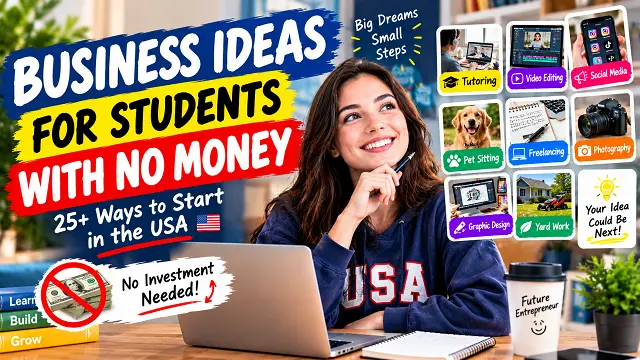
Being a student can be exciting, but managing money is not always easy. Between tuition, books, transportation, food, and everyday expenses, it can feel difficult to save anything at the end of the month. Maybe you want to pay for your own expenses, help your family, save for college, or simply stop asking your parents for money every time you need something.
The good news is that you do not always need money to start earning money. You can begin with a useful skill, a little free time, a smartphone or computer you already own, and a willingness to solve problems for other people.
The best business ideas for students with no money usually start small. Instead of buying products, renting an office, or paying for expensive advertising, you can offer a service, use free tools, or help someone with a task they do not have time to complete themselves.
For example, a student who understands mathematics could tutor younger students. Someone who enjoys making videos could edit short clips for local businesses. A student who is good at writing could help with blog content, while someone who loves animals might offer pet-sitting services in their neighborhood.
These opportunities will not make everyone rich overnight, and no business guarantees an income. However, starting small can help you learn valuable skills while working toward a financial goal.
In this guide, you will discover practical business ideas for students with no money in the United States, how to choose the right one, how to find your first customers, and how to avoid common mistakes that waste time and money.
“Starting with no money does not mean running a business will always be free. But it does mean you can begin with what you already have.”
Can Students Really Start a Business With No Money?
Yes, students can start certain businesses with little or no additional startup spending. The easiest options are generally service-based businesses because you sell your time, knowledge, or skills instead of purchasing inventory.
Imagine that you already have a laptop and an internet connection. You might be able to begin tutoring, writing, basic graphic design, video editing, or virtual assistance without purchasing additional equipment.
If you prefer working locally, you could offer dog walking, yard cleanup, basic organizing, or help with simple technology problems using equipment you already have.
There is an important distinction, though: starting with no money does not mean running a business will always be free. You may eventually need transportation, supplies, software, insurance, licenses, or other resources. Some platforms also charge fees.
The sensible approach is to begin with an idea that uses resources you already have and reinvest only when customers demonstrate genuine demand.
What You Need to Get Started
You may already have several things that can help you launch a small business:
- A smartphone or computer
- Internet access
- A skill you can teach or provide
- A few hours each week
- A reliable way to communicate
- People who might need your service
- The willingness to learn from feedback
You do not need to have all these things perfectly organized before beginning. You simply need enough resources to deliver a small, useful service safely and reliably.
1. Online Tutoring
Online tutoring is one of the most practical business ideas for students with no money because you can begin with a subject you already understand.
If you are good at mathematics, science, English, history, computer basics, or a foreign language, younger students may benefit from your help.
You do not need to teach every subject. In fact, specializing in one subject or age group can make it easier to explain your service to parents.
For example, you might offer online mathematics practice for middle-school students or reading support for elementary-school learners.
How to Start
First, choose a subject you understand well enough to explain clearly. Next, decide which age group you can comfortably teach.
Create a simple description of your service, including the topics you cover, session length, availability, and price. You can begin by contacting families you already know or asking trusted people to introduce you to potential customers.
You could conduct sessions through an appropriate video-calling platform, provided you have access to the necessary equipment and follow relevant privacy and safeguarding requirements.
How Much Can You Earn?
Your income depends on your subject, experience, location, session length, and customer demand. Rather than assuming you will immediately earn a particular amount, research comparable tutoring services in your area and choose a reasonable introductory rate.
Tutoring can also lead to repeat customers if students and parents find the service helpful.
Best for: Students who enjoy teaching, explaining difficult concepts, and working with younger learners.
2. Freelance Writing
If you enjoy writing, you can turn that ability into a small service business.
Businesses, bloggers, nonprofits, and online creators need written content for websites, newsletters, product descriptions, social media, and other materials.
You could begin with one type of writing rather than trying to handle every possible project.
For example, you might focus on short blog posts for local businesses, simple website descriptions, or social media captions.
How to Start Without Paying for Tools
Write two or three original samples that demonstrate your ability. You could create a sample article about a hobby, draft a fictional restaurant’s website introduction, or write a sample newsletter.
Use a free document editor to organize your work. Then contact potential clients with a brief message explaining what you offer and how it could help them.
Be honest about your experience. You do not need to pretend to be an established agency to provide a useful service.
What Makes This Business Worth Trying?
Writing can be done remotely, making it easier to fit around classes. You can also improve through practice and feedback.
However, finding paying clients may take time. Competition exists, and customers may expect accurate research, original work, clear communication, and timely delivery.
Best for: Students who write clearly and enjoy researching or explaining topics.
3. Social Media Assistance for Small Businesses
Many small businesses want to remain active on social media but struggle to create content consistently.
A local bakery, barber, gym, restaurant, or independent shop might need help preparing posts, writing captions, or organizing a monthly content calendar.
You do not have to promise viral growth or become a full-service marketing agency. Start with a small, clearly defined service.
Services You Could Offer
- Writing social media captions
- Creating basic post graphics
- Organizing content ideas
- Preparing weekly content calendars
- Editing short videos
- Scheduling approved posts
- Taking simple product photos
How to Find Your First Client
Look at local businesses whose content could be clearer or more consistent. Prepare a few sample posts for a fictional business or create a private mock-up for a potential client.
Contact the business politely and explain exactly what you can provide.
For example, you might offer to prepare a small batch of captions and graphics each month. Agree on the number of deliverables, revisions, deadlines, and payment before starting.
Avoid buying followers, posting misleading claims, or guaranteeing specific results.
Best for: Students who understand social platforms and enjoy creating content.
4. Short-Form Video Editing
Short videos are used by creators, online stores, restaurants, coaches, and many other businesses.
If you already know how to edit videos, you could offer to turn existing footage into short clips for social media.
Possible services include adding captions, trimming unnecessary sections, improving pacing, selecting suitable transitions, and preparing videos in the correct format.
Start With What You Have
Use a device and editing software you already own or can access legally at no additional cost. Make several sample edits using your own footage or media that you have permission to use.
Show potential clients what you can do instead of simply telling them that you are an editor.
You can specialize in a particular type of content, such as educational clips, podcast highlights, gaming videos, or local business promotions.
A Simple Pricing Approach
Consider the time needed to edit each video, the complexity of the project, revisions, and the client’s requirements.
A short clip with basic captions is different from a complicated edit with animations, sound design, and color correction.
Start with a manageable workload so that your business does not interfere with school.
Best for: Students who enjoy video editing and digital content.
5. Graphic Design Using Free Tools
Graphic design can become a student business if you can create clean, useful visual content.
Small organizations often need flyers, social media graphics, event posters, presentation slides, menus, and simple promotional materials.
You can practice with free design tools, although you should check each tool’s licensing and usage conditions before using its work commercially.
How to Build a Portfolio
Create sample designs for different fictional businesses. For instance, you might design a promotional flyer for a coffee shop, a social media post for a fitness class, and an event poster for a student club.
Keep your portfolio organized in a simple online folder or free portfolio page.
When approaching clients, explain what the design is for, what format they will receive, and how many revisions are included.
Do not use copyrighted logos, images, or fonts without the necessary permissions.
Best for: Students who enjoy visual communication and creative problem-solving.
6. Virtual Assistant Services
A virtual assistant helps businesses and independent professionals complete administrative tasks remotely.
You might help organize spreadsheets, format documents, schedule appointments, research publicly available information, or maintain simple task lists.
Many of these services rely more on reliability and attention to detail than expensive equipment.
Possible Services
- Spreadsheet organization
- Document formatting
- Calendar updates
- Basic online research
- Data entry
- Email organization
- Appointment reminders
- Preparing simple reports
Choose tasks that you can complete accurately. Do not claim expertise in accounting, legal work, cybersecurity, or other specialized fields unless you have the appropriate qualifications.
Protect client information, use secure accounts, and agree on how files will be handled.
Best for: Organized students who communicate well and enjoy administrative work.
7. Resume Formatting and Editing
Students applying for internships and entry-level jobs often need help presenting their experience clearly.
If you understand resume structure and have strong writing skills, you could offer formatting, proofreading, and general editing.
You might help clients organize their experience, correct grammar, improve readability, and make their documents more consistent.
Keep Your Service Honest
You are helping customers communicate their qualifications. You should not invent experience, create false credentials, or guarantee that someone will get hired.
Build a few fictional sample resumes using made-up information. This allows you to demonstrate your skills without sharing anyone’s private details.
You can also offer basic LinkedIn profile editing if you understand the platform.
Best for: Students who write well and enjoy helping others prepare for job applications.
8. Pet Sitting and Dog Walking
If you enjoy animals and are responsible, pet care may be an option in your neighborhood.
Pet owners may need help with dog walks, feeding visits, or basic care when they are busy or away.
Unlike an online service, this business may involve travel and physical work, so you should consider your location and schedule before offering it.
How to Start
Begin with people you or your family already know. Explain your availability and the specific tasks you are prepared to handle.
Before accepting a job, ask about the animal’s needs, behavior, feeding instructions, emergency contacts, and any special requirements.
Do not accept animals or tasks beyond your experience. Consider safety, insurance, local rules, and whether you need a trusted adult involved.
Best for: Responsible students who genuinely enjoy caring for animals.
9. Lawn Care and Yard Cleanup
Students who prefer outdoor work can consider basic yard services.
Depending on the equipment already available and local demand, you could offer leaf collection, weeding, garden cleanup, or other simple tasks.
You do not need to start with a large landscaping operation.
Start With Simple Services
Choose tasks you can complete safely using available equipment. Explain exactly what is included and whether the customer needs to provide supplies.
Avoid operating unfamiliar machinery or handling chemicals without appropriate training and safety precautions.
You should also account for weather, transportation, physical effort, and the time required to travel between customers.
Best for: Students who enjoy practical outdoor work and have a manageable local service area.
10. House Cleaning and Basic Organization
Cleaning and organizing services can be started on a small scale if you already have access to suitable supplies and can reach customers safely.
You might offer basic room organization, desk cleanup, closet sorting, or light cleaning tasks.
Some customers want help preparing a home for visitors, organizing belongings, or getting a room ready for a new purpose.
How to Make the Service Clear
Create a short checklist describing what you will do. Specify the areas covered, the expected duration, whether supplies are provided, and any tasks you do not perform.
Never promise specialized cleaning or hazardous-material handling unless you have the proper training and equipment.
For students, a small service area and limited weekend availability can make this easier to manage.
Best for: Students who are dependable, organized, and comfortable with physical work.
11. Technology Help for Beginners
If you are comfortable using computers and smartphones, you could help people with basic technology tasks.
Potential customers may need assistance organizing files, setting up a printer, learning video calls, or understanding everyday software.
You should keep the service within your skill level and avoid accessing sensitive financial accounts or handling confidential information unnecessarily.
Examples of Simple Services
- Organizing computer folders
- Helping set up a printer
- Explaining basic smartphone features
- Assisting with video-call setup
- Showing someone how to use everyday applications
- Helping organize digital photographs
Be patient. Many customers value clear explanations more than technical jargon.
Best for: Students who enjoy technology and helping people learn.
12. Digital Products
Digital products are files customers can purchase and use electronically.
Examples include planners, checklists, budget spreadsheets, study schedules, printable calendars, and original templates.
Once a product is created, you may be able to sell additional copies without manufacturing or shipping a physical item. However, marketing, customer support, platform fees, and product updates still require effort.
What Could You Create?
Think about problems you already understand as a student.
Perhaps you could create an assignment tracker, a weekly study planner, a simple personal budget spreadsheet, or a checklist for preparing for college applications.
Make the product genuinely useful. A generic template is unlikely to stand out unless it serves a particular audience or solves a specific problem.
You should also check platform rules, commercial licensing requirements, refund policies, and applicable taxes before selling.
Best for: Students who enjoy designing practical resources and can work independently.
13. Sell Your Skills Through Freelancing
Freelancing is not a single business model. It is a way to sell your skills directly to customers.
You might provide writing, proofreading, translation, design, editing, research, or another service that you can deliver well.
A freelance business can be started without buying inventory, although some platforms charge fees or require you to meet eligibility requirements.
How to Choose a Freelance Service
Start by listing three things you can do reasonably well.
Then identify which of those skills solves a problem someone might pay to fix.
For example, “I know computers” is broad. “I organize spreadsheets for small businesses” is more specific.
A clear offer helps customers understand what they are purchasing.
Do not accept work that requires you to misrepresent yourself, complete dishonest academic assignments for others, or violate a client’s rules.
Best for: Students with a practical skill they can deliver remotely.
14. Proofreading and Basic Editing
If you notice spelling mistakes and enjoy improving written communication, proofreading may be a suitable service.
Customers may need help reviewing newsletters, website pages, general business documents, or other material they have permission to share.
Proofreading is different from rewriting an entire document. Make sure clients understand whether you are correcting errors, suggesting improvements, or providing more substantial editing.
Start with samples that demonstrate your attention to detail.
Avoid taking on specialized legal, medical, or technical documents unless you have the necessary expertise.
Best for: Detail-oriented students who have strong language skills.
15. Photography With a Smartphone
You do not necessarily need an expensive camera to begin learning photography.
If your smartphone produces good images and you understand lighting and composition, you might offer basic photos for local events, products, or social media.
For example, a small business may need clear pictures of its products for an online listing.
You can practice by photographing objects you own and editing them with tools you can legally use.
Important Considerations
Get permission before photographing people for commercial use. Discuss where the images will be used and whether the customer can edit or reuse them.
Don’t advertise yourself as a professional photographer for complex events until your equipment and experience are appropriate for the job.
Best for: Students who enjoy visual storytelling and already have a capable phone.
16. Social Media Content Writing
Some businesses already have someone who manages their accounts but need help producing captions and content ideas.
You could specialize in writing short captions, drafting simple promotional messages, creating content calendars, or adapting approved information for different platforms.
This service is different from promising to grow an account or manage advertising campaigns.
You are selling clear writing and organized content.
Create a portfolio with sample captions for a few different business types. Explain your process, the number of posts included, and the expected turnaround time.
Best for: Students who understand social platforms and enjoy writing concise messages.
17. Sell Unused Items
Selling items you already own is not always a long-term business, but it can be a practical way to generate some starting money without purchasing inventory.
You might sell books, clothing, electronics, games, or other belongings you no longer need.
Only sell items you own or have permission to sell.
Make It Safer
Take clear photographs, describe the condition honestly, and check the rules of the marketplace you use.
Be cautious of fake payment confirmations, overpayment scams, suspicious links, and buyers who ask you to pay unusual fees to receive money.
For local exchanges, follow platform safety guidance and use appropriate public meeting locations when suitable.
Once you have learned how selling works, you can decide whether a separate resale business makes sense. However, purchasing inventory introduces risk and is not necessary for your first attempt.
Best for: Students who need to declutter and want to learn basic selling skills.
18. Handmade Products From Materials You Already Own
If you enjoy making crafts, you may be able to create small products using supplies you already have.
Possibilities include greeting cards, bookmarks, simple artwork, handmade decorations, or personalized paper goods.
The challenge is to make sure your costs do not exceed what customers are willing to pay.
Even materials you already own have value, and producing each item takes time.
Start with a small number of samples and ask potential customers for honest feedback before purchasing more supplies.
Check applicable safety and labeling rules if your products involve cosmetics, food, children’s items, or other regulated categories.
Best for: Creative students who already have suitable craft supplies.
19. Translation and Language Practice
If you are genuinely fluent in more than one language, you may be able to provide general translation or conversational practice.
For example, someone learning a language may want regular speaking practice, while a small business might need general content translated for its audience.
Be honest about your level of fluency and the types of work you can handle.
High-stakes documents, including legal and medical materials, may require qualified professionals.
You should also clarify whether your service is language practice, editing, or actual translation, since these are different tasks.
Best for: Multilingual students who communicate clearly.
20. Basic Website Setup
A student who understands website builders may be able to help a local business create a simple online presence.
A basic project could include a homepage, service list, contact details, opening hours, and an introduction to the business.
You may be able to practice using free tools, but publishing a business website may involve hosting, a domain name, paid features, or other expenses.
Explain those costs to the customer before beginning.
Do not promise advanced security, custom programming, or complex integrations unless you have the appropriate skills.
Best for: Students interested in technology, design, and online business.
21. Presentation Design
Students often create presentations for classes, clubs, events, and professional settings.
If you are good at organizing information visually, you could help customers improve the structure and appearance of presentations.
Potential projects include business presentations, event slides, educational presentations, and general informational materials.
Your role should be to improve the design and clarity of legitimate material—not to help someone misrepresent research, fabricate results, or violate academic integrity policies.
Build a portfolio with original sample slides and explain what is included in your service.
Best for: Students who enjoy visual organization and communicating information.
22. Podcast Assistance
Podcasters often need help with the tasks that happen before and after recording.
Depending on your skills, you could offer episode descriptions, show-note formatting, basic audio cleanup, short video clips, or publishing checklists.
You don’t need to offer every service.
Start with one task that you can complete reliably and learn the workflow.
If a project includes confidential recordings or personal information, agree on how files will be stored, accessed, and deleted.
Best for: Students interested in audio, video, writing, or digital media.
23. Event Assistance
Small events may require help with setup, registration, organization, or cleanup.
Students can investigate opportunities with community groups, local organizations, and event organizers.
Your responsibilities might include preparing materials, arranging approved decorations, helping guests find the right area, or organizing basic supplies.
Do not accept duties that require professional security, specialized equipment, or other qualifications you do not have.
Confirm the schedule, payment, transportation, and expectations before agreeing to work.
Best for: Students who are organized, sociable, and available during events.
24. Basic Spreadsheet Services
Many people use spreadsheets to track information but struggle to organize them.
If you understand basic spreadsheet software, you might help small businesses organize lists, format tables, create simple trackers, or improve the readability of existing files.
For example, a small organization may need a clear inventory list or an appointment tracker.
Keep the service within your ability. Do not offer financial, tax, or accounting advice unless you are qualified to do so.
Protect customer information and make sure you understand what data you are handling.
Best for: Students who enjoy organizing information and working with numbers.
25. Create Original Study Resources
You already understand many of the challenges students face, which can help you identify useful educational resources.
You could develop original revision checklists, subject planners, flashcards, or study schedules.
A resource should make learning or organization easier rather than simply repeat information that is freely available everywhere.
Never distribute copyrighted textbook pages, private exam materials, or someone else’s work without permission.
Before selling, make sure you understand the rules of any platform you use and any school policies that apply.
Best for: Students who enjoy planning, explaining concepts, and creating educational materials.
26. Basic Customer Support for Small Businesses
Some small businesses need help answering routine questions, organizing incoming messages, or keeping track of customer requests.
If you communicate professionally, you might offer limited administrative support.
For example, you could help organize a list of inquiries or draft responses for a business owner to approve.
You must follow the business’s privacy requirements and should never access sensitive information beyond what is necessary for the task.
Agree on working hours and response expectations so the job does not conflict with your studies.
Best for: Students who are patient, organized, and comfortable communicating with people.
27. Simple Digital Organization Services
People sometimes struggle to manage digital photographs, documents, downloads, and folders.
If you are good at keeping files organized, you could help customers develop a clearer folder structure or sort non-sensitive digital materials.
For privacy, work with permission and establish exactly which files you can access.
Do not open private documents unnecessarily or keep copies after the project is complete.
A simple service that saves someone time can be valuable even when it doesn’t involve advanced technical skills.
Best for: Students who enjoy organization and basic computer work.
How to Choose the Right Business When You Have No Money
Having many options is helpful, but choosing the right one matters more than trying everything at once.
Use the following steps to narrow your choices.
Step 1: List Your Existing Skills
Write down what you can already do.
Consider school subjects, hobbies, computer skills, writing, languages, sports, photography, organization, and communication.
You do not need to be an expert in everything. You do need to be capable of delivering the service you promise.
Step 2: Identify People Who Might Need Your Help
Think about people you can realistically reach.
Are there local businesses that need content? Parents looking for tutoring? Busy neighbors who need yard cleanup? Creators who need editing?
Start with a specific audience instead of trying to market to everyone.
Step 3: Check Your Available Time
Your schoolwork and personal responsibilities matter.
Look at your actual weekly schedule and identify realistic working hours.
A business that requires immediate responses all day may be unsuitable if you spend most of your day in classes.
Step 4: Calculate the Minimum Cost
Write down any expenses required to serve your first customer.
Include transportation, supplies, platform fees, equipment, and other costs.
If you cannot afford the minimum requirements, choose a different idea or find a safe, legitimate way to access the necessary resources.
Step 5: Test Demand Before Spending
Speak to potential customers. Ask what they currently do, what they find difficult, and whether your proposed service would help.
You can also offer a small paid trial with clearly defined expectations.
Interest is encouraging, but actual willingness to pay is stronger evidence that your business might work.
How to Start a Business With No Money: A 30-Day Plan
You do not need to spend months planning. A simple month-long test can help you learn whether your idea has potential.
Week 1: Choose One Idea
Select one service based on your existing skills and resources.
Write down:
- Your target customer
- The problem you solve
- The service you provide
- The time required
- The minimum startup cost
- How you will reach customers
Avoid switching ideas every day because another opportunity looks more exciting.
Week 2: Prepare a Simple Offer
Create a short description of your service.
If you’re a writer, prepare a few original writing samples. If you’re a designer, create sample graphics. If you offer tutoring, decide which topics and age groups you can support.
You can use a simple document or portfolio rather than paying for a website immediately.
Week 3: Contact Potential Customers
Reach out to a manageable number of people or businesses who may genuinely need your service.
Personalize your message.
Explain what you do and why it may help them. Avoid mass messaging, spam, and unrealistic promises.
Keep a record of responses so you can learn which types of customers are interested.
Week 4: Complete a Small Project
If you find a customer, agree on the work, deadline, price, and payment method before beginning.
Deliver the service carefully and ask for feedback.
Then review what happened.
Did customers understand the offer? Did the work take longer than expected? Were the costs manageable? Would you offer the same service again?
Use those answers to decide what to improve next.
How Students Can Find Their First Customers
Finding customers is often harder than choosing an idea.
The good news is that you do not need a huge audience to begin.
Start With Your Existing Network
Tell trusted friends, relatives, classmates, and community members what service you offer.
Be specific about the problem you solve.
For example, “I help local businesses edit short videos” is more useful than “I want to make money online.”
Contact Local Businesses
Small businesses may be easier to approach when you understand their needs.
Send a short, professional message describing your service and showing relevant examples.
Respect the owner’s time and accept that some businesses will not respond.
Use Online Communities Responsibly
Some communities allow members to promote services, but many do not.
Read the rules before posting. Don’t spam, pretend to be a satisfied customer, or make misleading claims.
Build Referrals
After completing a project successfully, ask whether the customer would be comfortable recommending your service.
Satisfied customers may introduce you to other people who need similar help.
Keep a Small Portfolio
A portfolio gives potential customers something concrete to evaluate.
You can use original samples, mock projects, or work you have permission to show.
Never publish private customer information without permission.
How Much Can Students Earn From a No-Money Business?
There is no reliable amount that every student can expect to earn.
Income depends on the service, local demand, skill level, available hours, competition, customer retention, and expenses.
Some students may earn very little while learning. Others may find repeat customers and build a more consistent side business over time.
Rather than believing guaranteed-income claims, make a basic calculation.
Suppose you charge $30 for a service and complete four jobs in a month. Your revenue would be $120 before expenses, taxes, and other obligations.
If you spend money on transportation or supplies, your profit will be lower.
This example is only an illustration, not a promise of what you will earn.
The purpose of your first few jobs is to understand the relationship between time, customer demand, expenses, and revenue.
As your experience grows, you may improve your service, find more suitable customers, or adjust your prices.
Mistakes to Avoid When Starting With No Money
Spending Before You Have Customers
Avoid paying for branding, subscriptions, inventory, or advertising before you understand whether people want your offer.
Use free resources where practical and spend only when a real need arises.
Choosing an Idea Only Because It Is Trending
A trend does not automatically create a good business.
You need a customer, a useful offer, and a realistic way to deliver the service.
Underestimating Your Time
A job may require preparation, travel, messages, revisions, and follow-up—not just the time spent doing the main task.
Consider the full workload before setting your price.
Making Unrealistic Income Claims
Be careful with courses, social media posts, and websites promising effortless income.
No legitimate business can guarantee that every student will earn a specific amount.
Ignoring Customer Agreements
Even a small project needs clear expectations.
Agree on deliverables, deadlines, payment, revisions, and cancellation terms.
For larger or more complicated projects, written agreements can help prevent misunderstandings.
Neglecting Your Education
A student business should fit around your academic responsibilities.
If your grades, sleep, or well-being begin to suffer, reduce your workload and reconsider your schedule.
Legal and Tax Considerations for Students in the USA
A small business can have legal and tax responsibilities even when it operates from home or earns only modest revenue.
Requirements vary by location, age, business activity, and other circumstances.
Depending on your situation, you may need to consider:
- Federal tax obligations
- State and local business requirements
- Licenses or permits
- Sales tax rules
- Business registration
- Insurance
- Recordkeeping
- Rules for handling personal information
Students should not assume that all small businesses are exempt from these requirements.
For reliable information, consult official resources such as the U.S. Small Business Administration and the Internal Revenue Service. If your situation is complicated, consider asking a qualified tax or legal professional.
If you are under 18, age restrictions may affect contracts, payment services, business accounts, and other activities. A parent or guardian may need to help you understand the applicable rules.
If you are an international student studying in the United States, do not assume that the same work and self-employment rules apply to you as they do to U.S. citizens. Check with your school’s designated international student adviser or a qualified immigration professional before starting paid work or a business.
Interested in unusual business ideas? Explore Strange Business Ideas That Made Millions.
Official U.S. business resources: SBA.gov IRS Small Business
Frequently Asked Questions
Final Thoughts
You do not need to wait until graduation to learn how business works.
If you have a useful skill, a little time, and a willingness to solve problems, you may be able to begin with a simple service instead of spending money on inventory or expensive tools.
The most practical business ideas for students with no money are often the ones closest to what you already know how to do. You might tutor younger students, edit videos, help a small business with social media, organize spreadsheets, proofread documents, or offer a suitable local service.
Start with one idea. Define the customer. Test whether people are willing to pay. Keep your expenses low, deliver good work, and learn from feedback.
Do not expect overnight success, and do not risk money you cannot afford to lose.
Your first customer may not change your financial situation immediately, but the experience can teach you valuable lessons about communication, responsibility, pricing, and customer service.
Those skills can help you whether you continue building a business, pursue a career, or use what you learn to explore a different opportunity.
