Does Astrology Really Work? An Honest Look at Both Sides
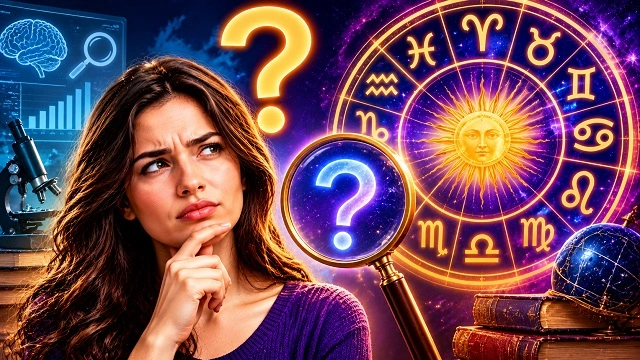
You’ve probably had this exact experience: you read a horoscope, roll your eyes a little, and then something in it lines up so perfectly with your week that you find yourself pausing mid-scroll, genuinely unsettled. That moment — half skepticism, half “okay, that’s weird” — is exactly why so many people end up asking does astrology really work, instead of just dismissing it outright or believing it completely.
The honest answer isn’t a simple yes or no. It depends heavily on what you mean by “work.” Does it predict the future with scientific accuracy? The evidence says no. Does it offer genuine value as a tool for reflection, conversation, and self-understanding? For a lot of people, surprisingly, yes. Let’s dig into both sides properly.
Does Astrology Really Work as a Predictive Science?
If you’re asking does astrology really work in the sense of accurately predicting specific future events, the scientific evidence doesn’t support it. There’s no known physical mechanism by which the position of a planet millions of miles away could influence your personality or the timing of events in your life. Gravity and light are the only measurable forces planets exert on Earth, and neither is strong enough at planetary distances to meaningfully affect human behavior.
Controlled studies have tested this directly. One frequently cited experiment, run by physicist Shawn Carlson and published in the journal Nature back in 1985, asked professional astrologers to match birth charts to personality profiles without knowing which chart belonged to which person. The astrologers performed no better than random chance. Multiple similar studies since then have found comparable results. From a strict scientific standpoint, the answer to does astrology really work as prediction is a fairly clear no.
So Why Does It Feel So Accurate Sometimes?
This is where things get genuinely interesting, and where a lot of the “does astrology really work” debate actually lives. Even without any real predictive power, astrology can feel eerily accurate — and there are well-documented psychological reasons why.
The Barnum effect describes our tendency to accept vague, general statements as personally specific, even when they’d apply to almost anyone. A horoscope saying “you’ve been holding back your true feelings lately” sounds personal, but it’s broad enough to fit nearly every person reading it that day.
Confirmation bias plays a role too. If your horoscope predicts a stressful day, you’ll notice every small annoyance and mentally file it as proof. If it predicts good news, you’ll remember the one nice thing that happened and forget the rest of an otherwise ordinary day.
Neither of these effects means astrology “works” in a scientific sense. They explain why it feels like it works, which is a very different — and honestly more interesting — question.
Where Astrology Actually Does Something Useful
Even skeptics tend to agree astrology has genuine value in a different sense: as a structured framework for self-reflection. When people ask does astrology really work, they’re often really asking whether it can help them understand themselves or their relationships better — and here, the answer shifts.
Talking about your “Moon sign” or your “Mercury placement” gives people an accessible starting point for conversations about emotional needs, communication style, or personality patterns that might otherwise feel awkward to bring up directly. It’s less that the planets are doing anything, and more that astrology provides vocabulary and structure for thoughts people were already having.
This is similar to how personality frameworks like Myers-Briggs work — not scientifically airtight, but genuinely useful as a lens for self-reflection and communication, regardless of their predictive accuracy.
The Placebo-Like Effect of Belief
There’s an interesting psychological angle worth mentioning here too. Believing your horoscope suggests today is a good day for bold decisions can genuinely make you more confident and decisive that day — not because the planets aligned, but because the belief itself shaped your mindset and behavior. In that narrow sense, astrology can “work” the same way a placebo can help with certain symptoms: not through the mechanism it claims, but through the psychological effect of belief itself.
This doesn’t validate astrology as a predictive system. It does explain why people who use it consistently often report it “working for them,” even when controlled studies show no real predictive accuracy behind it.
This effect isn’t unique to astrology, either. Similar patterns show up with lucky charms, affirmations, and even certain rituals people perform before big events like job interviews or exams. The common thread isn’t that any of these objects or practices have inherent power — it’s that believing in a supportive structure, whatever form it takes, can genuinely shift confidence and behavior in measurable ways.
What Serious Astrologers Actually Say
It’s worth noting that many thoughtful, experienced astrologers don’t claim astrology works as strict, deterministic prediction either. Many describe it more as a symbolic language — a way of mapping tendencies, themes, and potential timing windows, rather than fixed, unavoidable outcomes. Under that framing, does astrology really work becomes less about literal accuracy and more about whether the symbolic interpretation offers useful insight, similar to how a well-written personality assessment might.
This more modest framing tends to hold up better under scrutiny than the idea that planetary positions directly cause specific life events. It also shifts the conversation away from “is this true or false” and toward “is this a useful way to think about my life,” which is a much harder claim to definitively disprove, and arguably a more honest question to be asking in the first place.
How to Actually Use Astrology, Given All This
If you’re genuinely trying to figure out does astrology really work for you personally, a balanced approach tends to work best:
- Use it for reflection, not prediction. Treat your chart as a conversation starter about your patterns and tendencies, not a forecast of exact future events.
- Stay aware of the Barnum effect. If a description feels “eerily accurate,” ask whether it’s specific enough to genuinely be about you, or vague enough to fit almost anyone.
- Don’t base major decisions on it alone. Career moves, relationship choices, and financial decisions deserve real research and honest self-assessment, not planetary alignment.
- Enjoy it without needing it to be scientifically proven. Plenty of enjoyable, meaningful practices — journaling prompts, personality quizzes, tarot — offer value without needing to be empirically validated.
The Honest Middle Ground
Does astrology really work? As a scientific predictive system, the evidence says no — controlled testing hasn’t shown it to outperform chance. As a tool for self-reflection, conversation, and structured personal insight, plenty of people find genuine value in it, independent of whether the underlying mechanism is real. Both of these things can be true at the same time, and holding that nuance is more honest than picking a side and dismissing the other entirely.
The healthiest way to engage with astrology probably isn’t asking whether it’s “real” in an absolute sense, but asking what specific value you’re getting from it — self-awareness, conversation, comfort, entertainment — and being clear-eyed about the difference between that value and literal predictive accuracy.
That distinction matters more than it might seem. Confusing genuine self-reflection value with actual predictive power is where astrology tends to cause real problems — skipped opportunities, delayed decisions, or unnecessary anxiety over a “bad” reading. Keeping the two separate lets you enjoy the reflective benefits without accidentally treating a horoscope as a fixed script for your life.
Final Thoughts
If you came here hoping for a simple yes or no, the honest answer is more layered than that. Astrology doesn’t hold up as a scientifically validated predictive system, but it does offer real psychological and reflective value for a lot of people, whether through the Barnum effect, confirmation bias, or simply having a structured language for self-understanding. Whether that counts as astrology “really working” probably depends less on the planets, and more on what you’re actually using it for — and that’s a question only you can honestly answer for yourself.
Frequently Asked Questions
Has astrology ever been scientifically proven?
No controlled scientific study has shown astrology to reliably predict outcomes better than random chance, including well-known research published in the journal Nature.
Why do horoscopes sometimes feel so accurate?
This is largely explained by the Barnum effect, where vague, broadly written statements feel personally specific, combined with confirmation bias, where we notice details that match a prediction and overlook the ones that don’t.
Can astrology still be useful even if it isn’t scientifically accurate?
Yes, for many people it functions as a helpful tool for self-reflection and conversation, similar to other unscientific but meaningful practices like personality quizzes or journaling prompts.
Should I make big decisions based on astrology?
It’s generally safer to use astrology for reflection rather than as the deciding factor in major life choices like careers, relationships, or finances, which benefit more from research and honest self-assessment.
This article is intended for informational and entertainment purposes only and is not a substitute for professional or scientific advice.