Should We Believe in Astrology for Marriage?
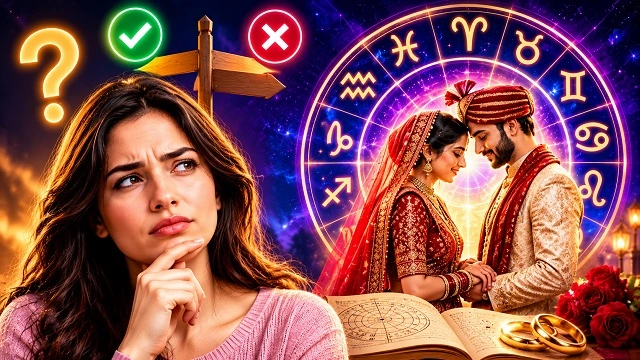
Somewhere in almost every Indian household, there’s a version of the same conversation: two families exchange kundlis before a wedding gets confirmed, an astrologer studies the charts, and everyone waits to hear whether the match is “good” or “manglik” or missing some crucial planetary alignment. For some families, this is non-negotiable tradition. For others, it’s an outdated ritual that has no business influencing a modern relationship. And for a lot of people caught in between, the honest question is simpler than either extreme: should we believe in astrology for marriage, or is it just tradition dressed up as certainty?
There’s no single right answer here, but there is a more useful way to think about it than a flat yes or no.
Should We Believe in Astrology for Marriage, or Just Consider It?
The most balanced answer to should we believe in astrology for marriage probably isn’t full belief or full rejection — it’s treating it as one input among several, rather than the deciding factor. Kundali matching and compatibility astrology can highlight potential friction points, communication styles, and emotional needs between two people. What it can’t do is guarantee happiness, predict whether someone will be faithful, or replace an honest conversation about values, goals, and expectations.
Think of it less like a verdict and more like an early conversation starter — something that flags areas worth discussing openly with a partner, rather than a final judgment that decides whether the marriage should happen at all.
Why So Many Families Still Believe in Astrology for Marriage
There are real, practical reasons astrology remains deeply embedded in marriage decisions, especially in cultures where arranged or semi-arranged marriages are common. When two people don’t have years of dating history to draw on, families look for other signals to reduce uncertainty. Astrology, in that context, becomes a shared language for evaluating compatibility before two people have had much time to actually know each other.
There’s also a strong element of tradition and continuity. Generations of families have used kundali matching before marriage, and continuing that practice isn’t just about believing every prediction — it’s about honoring a cultural process that carries emotional and social weight, even for people who hold some personal skepticism about the details.
What Astrology Can Genuinely Offer Before Marriage
Setting aside the belief-versus-skepticism debate for a moment, there are a few areas where astrology tends to add real, practical value when it comes to marriage:
- Highlighting communication differences. Moon and Mercury placements can point toward how each person processes emotions and expresses themselves, which matters enormously in a long-term partnership.
- Flagging potential friction points early. A challenging synastry aspect between two charts doesn’t guarantee conflict, but it can prompt a useful conversation about expectations before problems actually show up.
- Offering a shared ritual for two families. Especially in arranged marriage contexts, kundali matching gives both families a structured, culturally respected way to engage with the decision together.
None of this requires unquestioning belief. It just requires treating the process as informative rather than absolute.
Where the Skepticism Comes From
The case against relying heavily on astrology for marriage decisions is worth taking seriously too. A few concerns come up consistently:
It can create unnecessary fear. Labels like “manglik dosha” or a poorly matched kundali can cause real anxiety, sometimes ending otherwise strong relationships over a prediction that was never scientifically validated in the first place.
It can be used to justify decisions already made for other reasons. Sometimes families lean on astrology to rationalize objections that are actually about caste, class, or personal preference, using the chart as cover for a decision that was really made on different grounds entirely.
It doesn’t account for effort and growth. A “difficult” compatibility reading doesn’t factor in two people’s willingness to communicate, compromise, and grow together — qualities that matter far more to a marriage’s long-term success than any single planetary placement.
There’s no strong scientific backing. Controlled studies on astrology’s predictive accuracy have consistently failed to show results better than chance, which is a legitimate reason to avoid treating any single reading as a definitive answer, especially for something as significant as a marriage decision.
A More Balanced Way to Approach It
If you’re genuinely asking yourself should we believe in astrology for marriage, a middle-ground approach tends to serve people best:
- Use it as a conversation starter, not a final decision-maker. If a compatibility reading flags a potential issue, talk about it directly with your partner instead of treating it as an unavoidable outcome.
- Don’t let a single “dosha” or negative reading end a relationship on its own. Combine it with your own experience of the person — how they communicate, how they handle disagreement, whether your values actually align.
- Watch for how it’s being used within your family. If astrology is being cited as the real reason for an objection that seems to be about something else entirely, it’s worth having an honest conversation about what’s actually driving the concern.
- Respect the tradition without treating it as absolute science. You can honor kundali matching as a meaningful cultural practice while still trusting your own judgment about the relationship itself.
What Matters More Than the Chart
Marriage researchers and therapists consistently point to a fairly consistent set of factors that predict long-term relationship success — communication patterns, conflict resolution style, shared values around money and family, emotional support, and mutual respect. None of these show up directly on a kundali. They show up in how two people actually treat each other, day after day, especially during disagreements and stress.
This doesn’t mean astrology has zero value in the marriage conversation. It means the chart is, at best, a starting point for understanding tendencies — not a substitute for actually getting to know someone and observing how they behave over time.
A Practical Middle Ground for Modern Couples
Plenty of couples today land somewhere in the middle: they get a kundali match done out of respect for family tradition, treat any flagged concerns as topics to discuss honestly rather than dealbreakers, and ultimately make their decision based on their own relationship experience alongside whatever the reading suggested. This approach tends to satisfy both sides of the question — honoring cultural practice while keeping the final decision grounded in real compatibility, not just planetary alignment.
If you’re navigating this with your own family, it can help to frame it exactly that way: not rejecting the tradition outright, but asking for it to be treated as one input among several, rather than the single deciding factor in whether a marriage moves forward.
This kind of framing tends to reduce a lot of unnecessary tension between generations. Older family members often feel dismissed when younger couples reject astrology outright, while younger couples often feel unheard when a chart reading is treated as final and non-negotiable. Positioning kundali matching as a respected part of the process — rather than either the whole process or an irrelevant formality — tends to keep both sides at the table instead of talking past each other.
Final Thoughts
So, should we believe in astrology for marriage? The most honest answer is: believe in it as a lens, not a law. It can offer genuine insight into communication styles, emotional needs, and potential friction points worth discussing early. What it shouldn’t do is replace real conversations, personal judgment, or the years of actual relationship-building that determine whether a marriage actually works. Treated that way, astrology becomes a useful part of the process rather than the entire decision.
At the end of the day, no chart — however detailed — can replace the years of actual living together that reveal whether two people are truly compatible. It can point you toward useful questions to ask early. It can’t answer those questions for you.
Frequently Asked Questions
Is kundali matching scientifically proven to predict marriage success? No controlled scientific studies have shown astrology, including kundali matching, to reliably predict marriage outcomes better than chance. It’s best treated as a cultural and reflective tool rather than a scientifically validated prediction system.
Should a negative kundali match end a relationship? Not necessarily on its own. Many couples with challenging compatibility readings build strong, lasting marriages through communication and effort, while some “well-matched” couples still struggle due to factors astrology can’t measure, like personal effort and values alignment.
Why do so many families still insist on kundali matching before marriage?
It’s rooted in long-standing cultural tradition and offers a shared, structured way for families to engage with a major life decision together, especially in contexts where two people may not have extensive dating history beforehand.
Can astrology and personal judgment work together when deciding on marriage?
Yes, and this is often the healthiest approach. Using astrology as one input alongside genuine relationship experience, communication, and shared values tends to lead to more balanced, well-informed decisions than relying on either factor alone.
This article is intended for informational and reflective purposes only and is not a substitute for professional relationship or family counseling.