Why You Shouldn’t Believe in Astrology (At Least Not Blindly)
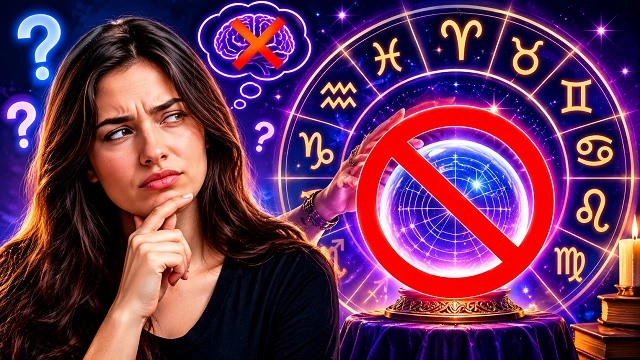
There’s a decent chance you found this article after reading three horoscopes in a row, feeling a little too seen by one of them, and then immediately wondering if you’re losing your grip on rational thought. You’re not. Curiosity about astrology doesn’t make you gullible, and reading a birth chart for fun doesn’t mean you’ve abandoned critical thinking. But it’s worth sitting with the other side of the conversation too — the honest, unflinching case for why you shouldn’t believe in astrology, at least not without some healthy skepticism attached.
This isn’t an attempt to ruin anyone’s fun or talk you out of checking your horoscope on a rough Monday. It’s a genuine look at the arguments skeptics raise, so you can hold onto astrology as a tool for reflection without mistaking it for science, fate, or a replacement for actual decision-making.
Why You Shouldn’t Believe in Astrology as a Predictive Science
The biggest reason scientists and skeptics push back on astrology comes down to one simple issue: there’s no mechanism that explains how the position of a planet millions of miles away could influence your personality or the timing of events in your life. Gravity and light are the only forces planets exert on Earth in any measurable way, and neither is remotely strong enough at that distance to shape human behavior or life events.
This is one of the clearest reasons why you shouldn’t believe in astrology as a literal predictive science. It’s not that astrologers are lying — many genuinely believe in what they practice — but the underlying claim (that planetary positions cause or influence specific outcomes in your life) has never been demonstrated in a way that holds up to controlled testing.
The Barnum Effect: Why Horoscopes Feel So Accurate
Ever read a horoscope and thought, “wow, that’s exactly me”? That reaction has a name: the Barnum effect, named after showman P.T. Barnum, known for the phrase “a sucker born every minute.” It describes our tendency to accept vague, general statements as uniquely personal, even when they’d apply to almost anyone.
Statements like “you sometimes doubt whether you made the right decision” or “you have unused potential you haven’t fully tapped into” sound specific in the moment, but they’re true for nearly every person alive. This is a major part of why you shouldn’t believe in astrology without questioning it a little — horoscopes are often written broadly enough that they feel personal to whoever’s reading them, regardless of their actual sign.
Confirmation Bias Does a Lot of Heavy Lifting
Here’s an uncomfortable but important point: humans are wired to notice things that confirm what we already expect, and ignore things that don’t. If you believe Geminis are talkative, you’ll remember every chatty Gemini you meet and quietly forget the quiet ones. If your horoscope says today will be stressful, you’ll notice every small annoyance and mentally check it off as proof the prediction was right.
This pattern — called confirmation bias — is one of the more scientifically grounded reasons why you shouldn’t believe in astrology at face value. It’s not that astrology “works.” It’s that our brains are extremely good at finding patterns and connections, even in random or coincidental events, and astrology gives us a ready-made framework to slot those patterns into.
Scientific Studies Haven’t Backed It Up
Astrology has actually been tested. Multiple controlled studies over the past several decades have asked professional astrologers to match birth charts to personality profiles or life outcomes, without being told which chart belonged to which person. The results, across the board, have consistently shown accuracy no better than random chance.
One of the most cited studies, conducted by physicist Shawn Carlson in the 1980s and published in the journal Nature, tested this exact setup and found astrologers performed no better than guessing. This kind of controlled testing is central to why you shouldn’t believe in astrology as an empirically validated system — when put under the same scrutiny as any other scientific claim, it hasn’t held up.
Astrology Can Encourage Passive Decision-Making
Beyond the scientific arguments, there’s a more practical concern worth mentioning. Leaning too heavily on astrology for major life decisions — quitting a job because Mercury is retrograde, staying in a relationship because the synastry chart looked good, avoiding a big opportunity because “the timing isn’t right” astrologically — can quietly replace real decision-making with a kind of passive waiting game.
This is a subtler but genuinely important reason why you shouldn’t believe in astrology as a decision-making authority. Life decisions benefit from research, self-reflection, and honest conversations with people who know your actual situation, not planetary positions that have no direct connection to the specifics of your circumstances.
The Zodiac Signs Have Actually Shifted
Here’s a detail that surprises a lot of people: due to a slow wobble in Earth’s rotation called precession, the constellations have drifted from where they were when the tropical zodiac was originally mapped out thousands of years ago. If you check where the sun actually was on your birthday relative to the current constellations, there’s a solid chance you’d technically fall under a different sign than the one you’ve always identified with.
Western tropical astrology sidesteps this by basing signs on the seasons rather than the constellations themselves, but it’s a detail worth knowing if part of your skepticism is rooted in astronomy. It’s one more piece of the puzzle in why you shouldn’t believe in astrology as a literal, astronomically accurate system, even if the season-based logic makes internal sense within the tradition itself.
So Why Do So Many People Still Believe In It?
If the scientific case against astrology is this strong, why does it remain so popular? A few honest reasons come up again and again:
- It offers comfort during uncertainty. Life is unpredictable, and having a framework — even an unproven one — can feel calming.
- It gives people a language for self-reflection. Talking about your “Mercury in Gemini” can be an easier entry point into discussing your communication style than starting from scratch.
- It creates a sense of community. Compatibility charts, group readings, and shared zodiac jokes build genuine social connection, regardless of whether the underlying science holds up.
- It’s genuinely fun. Not every interest needs to be scientifically airtight to be enjoyable.
None of these reasons make astrology “true” in a scientific sense, but they explain why millions of otherwise rational people still enjoy engaging with it.
How to Enjoy Astrology Without Being Fooled By It
You don’t have to fully reject astrology to take the skeptical case seriously. A more balanced approach tends to work best:
- Treat it as entertainment and self-reflection, not prediction. Use it to spark conversations about your own patterns, not to forecast specific future events.
- Don’t make major decisions based on it alone. Big life choices deserve real research and honest self-assessment, not planetary alignment.
- Watch for the Barnum effect. If a description feels “eerily accurate,” ask whether it’s specific enough to actually be about you, or vague enough to apply to almost anyone.
- Stay curious, not dogmatic. You can enjoy reading your horoscope for fun while still being honest with yourself about the lack of scientific evidence behind it.
Final Thoughts
Understanding why you shouldn’t believe in astrology as a literal, scientifically validated system doesn’t mean you have to give up something you enjoy. It just means holding it with a lighter grip — treating it the way you might treat a fun personality quiz or a thought-provoking conversation starter, rather than a genuine map of your fate. The healthiest relationship with astrology is one where you get the fun and reflective parts without handing over real decisions to something that hasn’t held up under actual scientific testing.
That balance — curiosity without dependence — is really the whole point. Astrology can still be a genuinely useful mirror for self-reflection, a fun way to bond with friends over shared signs, and an interesting cultural tradition worth understanding, even while you keep a clear-eyed view of its scientific limitations. Skepticism and enjoyment aren’t actually opposites here; they can comfortably coexist.
LOVE CALCULATOR
Frequently Asked Questions
Is there any scientific evidence supporting astrology?
Controlled studies, including well-known research published in Nature, have consistently found astrologers perform no better than random chance when matching charts to personalities, which is one of the strongest arguments against treating astrology as a scientific system.
Why do horoscopes feel so accurate sometimes?
This is largely explained by the Barnum effect, where vague, broadly applicable statements feel personally accurate because they’re written to apply to almost anyone.
Is it wrong to enjoy astrology even if it isn’t scientifically proven?
Not at all. Plenty of things people enjoy — personality quizzes, tarot, even horoscopes — aren’t scientifically validated but can still offer genuine value as tools for reflection or entertainment.
Should I use astrology to make big life decisions?
It’s generally safer to treat astrology as a reflective or entertainment tool rather than a decision-making authority, especially for major choices like careers, relationships, or finances.
This article presents a skeptical perspective on astrology for balanced, informational purposes and is not intended as scientific or professional advice.